
|
 |
Let's get right to the point...
Straight talk, with no useless terms, no creative "philosophy" and no deceptive half-truths
 Because you want to win. For many people, the language of advertising is tricky, like trying to read Chinese characters when you don't know Chinese.
Many firms and organisations expect a global perspective and global solutions from their advertising and public relations.
We're not simply "European" or "American." We're an international
agency with clients in four continents. For most of them, the internet is
the simplest, most economical way to reach people. That said, we're not just about
website design. Our people have had extensive experience in every facet
of advertising and public relations, in places like New York, London, Los Angeles, Tokyo, Milan and
throughout Italy. Our no-nonsense philosophy is simple, and it works. For us, the word success only means results. Here are
a few...
Because you want to win. For many people, the language of advertising is tricky, like trying to read Chinese characters when you don't know Chinese.
Many firms and organisations expect a global perspective and global solutions from their advertising and public relations.
We're not simply "European" or "American." We're an international
agency with clients in four continents. For most of them, the internet is
the simplest, most economical way to reach people. That said, we're not just about
website design. Our people have had extensive experience in every facet
of advertising and public relations, in places like New York, London, Los Angeles, Tokyo, Milan and
throughout Italy. Our no-nonsense philosophy is simple, and it works. For us, the word success only means results. Here are
a few...
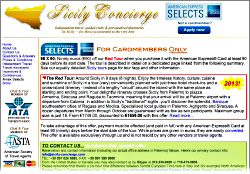 American Express® - travel |
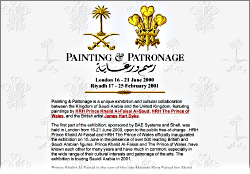 The Prince of Wales - charity fundraising |
 Simple Minds - concerts |
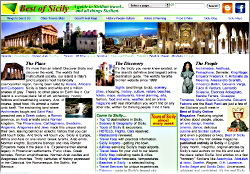 Best of Sicily - destination guide |
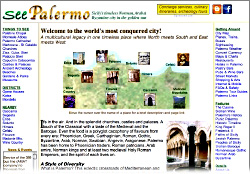 See Palermo - tourism |
 Etro® - fashion, in The New York Times |
Here are a few effective advertising principles, point by point:
• Strategy
At the outset, it's extremely important to position what you're selling or presenting to the public. This involves defining
your identity and your potential customers or listeners. If you hire us, you can expect efficient advertising. We won't waste your money on vague, misdirected strategies.
Instead, you'll get strategies that work. Everything we do is oriented toward real results. Technology has changed the face
of advertising but not its essential principles. In its purest form, advertising consists of words and pictures. It's in their
synergy that the magic begins.
• Communication & Creativity It doesn't get much
simpler than this. It's true that good advertising and public relations
require creative presentation. But many excessively "creative"
campaigns have failed. The essential element in most campaigns, especially
those of long duration, is clear communication that motivates action on
the part of the people reading or viewing your advertising. Creativity is
valid only to the extent that it sells. Beyond that, it's little more than
entertainment.
It doesn't get much
simpler than this. It's true that good advertising and public relations
require creative presentation. But many excessively "creative"
campaigns have failed. The essential element in most campaigns, especially
those of long duration, is clear communication that motivates action on
the part of the people reading or viewing your advertising. Creativity is
valid only to the extent that it sells. Beyond that, it's little more than
entertainment.
• Motivating a Response
That's not to say that effective communication must be dull
or boring. On the contrary, it has to be interesting enough to provoke action,
whether the desired response is the purchase of a good product or service,
a contribution to a worthy cause, or increased awareness of an important
social issue. David Ogilvy and Leo Burnett, two of the most gifted advertising agents
of all time, acknowledged this fundamental reality, and they weren't alone.
More web-based advertising (promoted via web sites) would be profitable
if it gave priority to substance rather than style.
• Words
Images are only part of the picture. You may perceive images as
the most important thing in selling products, but even on television it's
usually words (dialogue) that communicate actual ideas. (Consider that radio communicates advertising without the aid of visual images.) Good copywriting
should hold the reader's interest long enough to motivate her to decide
whether your message is worth listening to. That's the name
of the game. as we've said, it's the magical combination of words and pictures that works – as in our
classic Etro campaign.
 • Pictures
While visual elements may not
be the primary focus of most advertising employed to present complex ideas, nobody
wants to view an ad or website that lacks appealing visual imagery. Sometimes, a picture
can be worth a thousand words, even if it's just an updated version of a
traditional heraldic symbol or the presentation of a starlet as a classical Greek goddess. In a truly effective
campaign, text and images are complementary; they work together.
• Internationalisation
A fancy word
for a very simple concept: Communicating the same message to potential customers
in various national markets, sometimes using different approaches rooted in national languages or cultures. Few ad agencies can "localize"
their clients' messages for use in a "foreign" country, and few international agencies will do so on an affordable budget. This important aspect of many companies' campaigns is one of our strongest points.
• The Web
Is internet-based advertising efficient? Yes –
especially considering the growing use of smartphones and tablets. Our advertising has launched several successful
businesses using internet based campaigns (namely websites and sponsored link ads) exclusively. While it hasn't completely supplanted print or
television, the Web is the fastest-growing means of communication globally. The few companies (and organizations) who know
how to use the web are doing very well indeed. Think Amazon. Significantly, these are the firms who trusted their own proven business
instincts despite a lot of silly ideas advanced by "creative" young cyber hotshots who'd never read a business
journal or handled a direct-mail campaign. In fact, web marketing is very similar to direct mail, its fundamental principles little-changed
in over a century – the first Montgomery Ward catalog appeared in 1872. The "internet
crash" that occurred over a decade ago resulted from poor advertising and marketing models, not the Web itself.
Search engine optimization (SEO) is as important as ever, and we're pretty good at it but, as we've said, traditional advertising principles have not changed. To be a winner in the international marketplace, you still need sound advertising and a solid marketing infrastructure.
• Work with Us
Send us an email to learn what we can do for you.
Leggi questa pagina in italiano.